runpoint.home
Command Palette
Type to search. Press Enter for the top match.
← All case studies
Field-guide line illustration of a custom millwork shop interior with a clipboard P&L on a workbench and pine trees through the open shop door

Architectural fabrication

A custom fabrication shop in Austin

Same operator, different business. The same playbook ported into a fabrication shop, on the same software our consulting clients run on.

5 systems
Replacing memory, spreadsheets, and back-of-the-envelope tracking

What we did, by area

SalesPipeline + jobs. Pipeline view layered on top of the active jobs, so the same screen tells you what's coming and what's running.
Built with
AirtableNext.js
FinanceAR / AP and P&L. Money owed and money due in real time, with the books cleaned up enough that the operator could trust the number.
Built with
QuickBooks OnlineAirtableNext.js
OperationsContract review. Incoming contracts get parsed automatically before signing. Scope, terms, deadlines, and payment milestones extracted in plain language.
Built with
ClaudeEmail triggerNext.js
PlanningWeekly meeting. A standing weekly review where the whole team looks at the same numbers, the same pipeline, and the same active jobs.
Built with
AirtableNext.js

Before

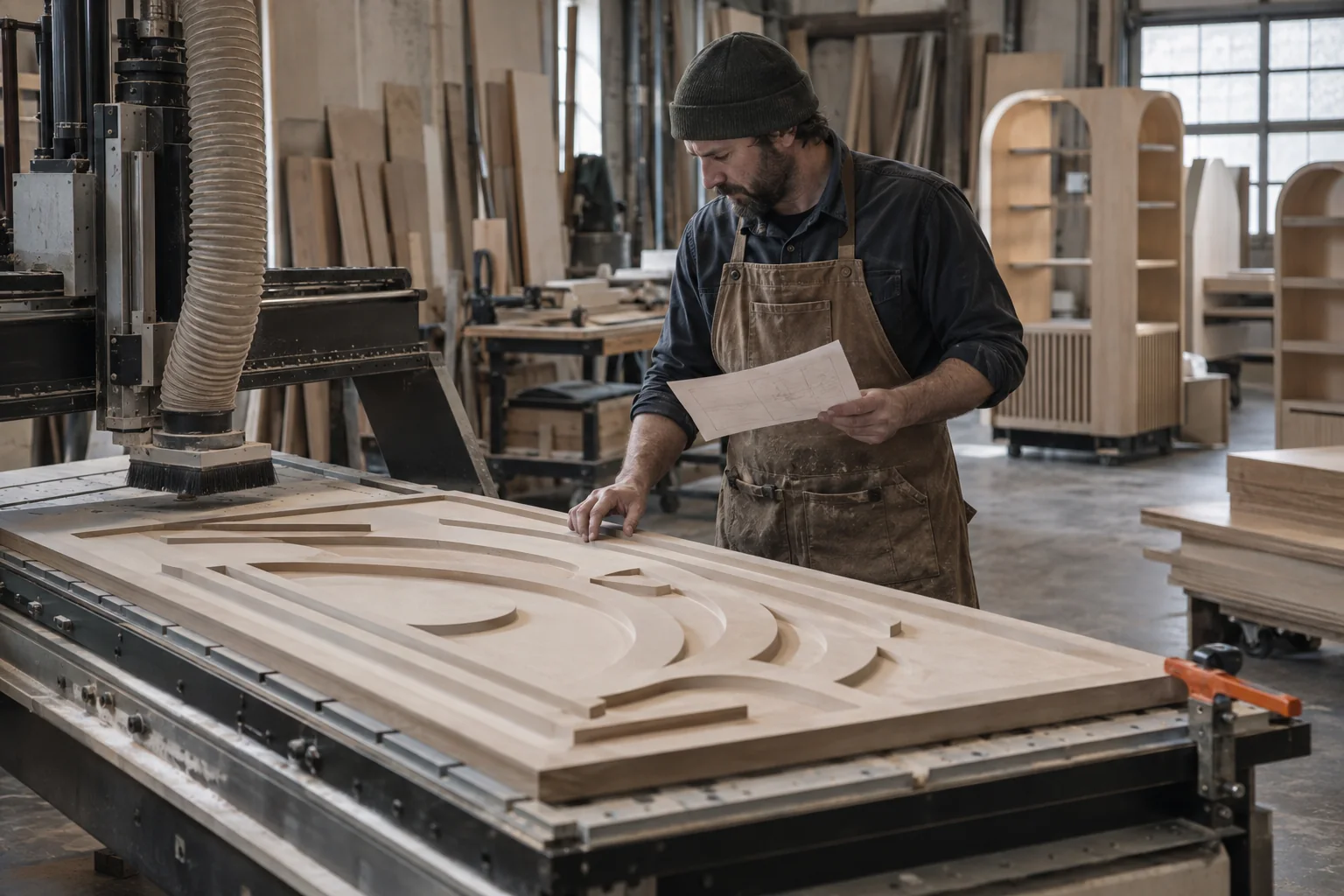
One of our founding partners runs a custom millwork shop on the side, building signage, retail fixtures, and feature pieces for restaurants and commercial buildings. Like most shops its size, it ran on memory and spreadsheets. Money owed drifted, the books lagged behind reality, jobs were tracked in people's heads, and contracts got signed without anyone reading them in a structured way. There was no standing meeting where the team looked at the same numbers together.

The first bet

Get a number the operator could trust

We started with the books, because there's no point planning around bad numbers. We cleaned up the P&L and built a view that showed money owed and money due in real time, so the operator could pull up one screen and know exactly where the shop stood. Everything else came after that.

What we built next

01

A pipeline view

Once the books were clean we layered the active jobs and the pipeline on top, so a glance at one screen showed both the work running through the shop and the work coming behind it.

02

Contract review

Incoming contracts now get parsed before anyone signs them, with the scope, terms, deadlines, and payment milestones pulled out in plain language so the operator can read what he's actually agreeing to.

03

A standing weekly meeting

The whole team meets every week looking at the same numbers, the same pipeline, and the same active jobs. That meeting wouldn't exist if the data underneath wasn't trustworthy.

What's now possible

The shop now runs on the same software our consulting clients run on, which is the cleanest argument we have for the way we work. When we tell a CEO that one operator-engineer can rewire the way their company runs, we're describing something we've already done in a custom millwork shop in Austin.

Want this kind of work for your business?

SYSTEMS: NOMINAL
LATENCY: 12msRUNPOINT V2.0