Your CRM, HR, finance and planning in one free system you own.
Runpoint Foundation™ is where every build starts. We give it away, and charge only for the work to make it look and work like your company.

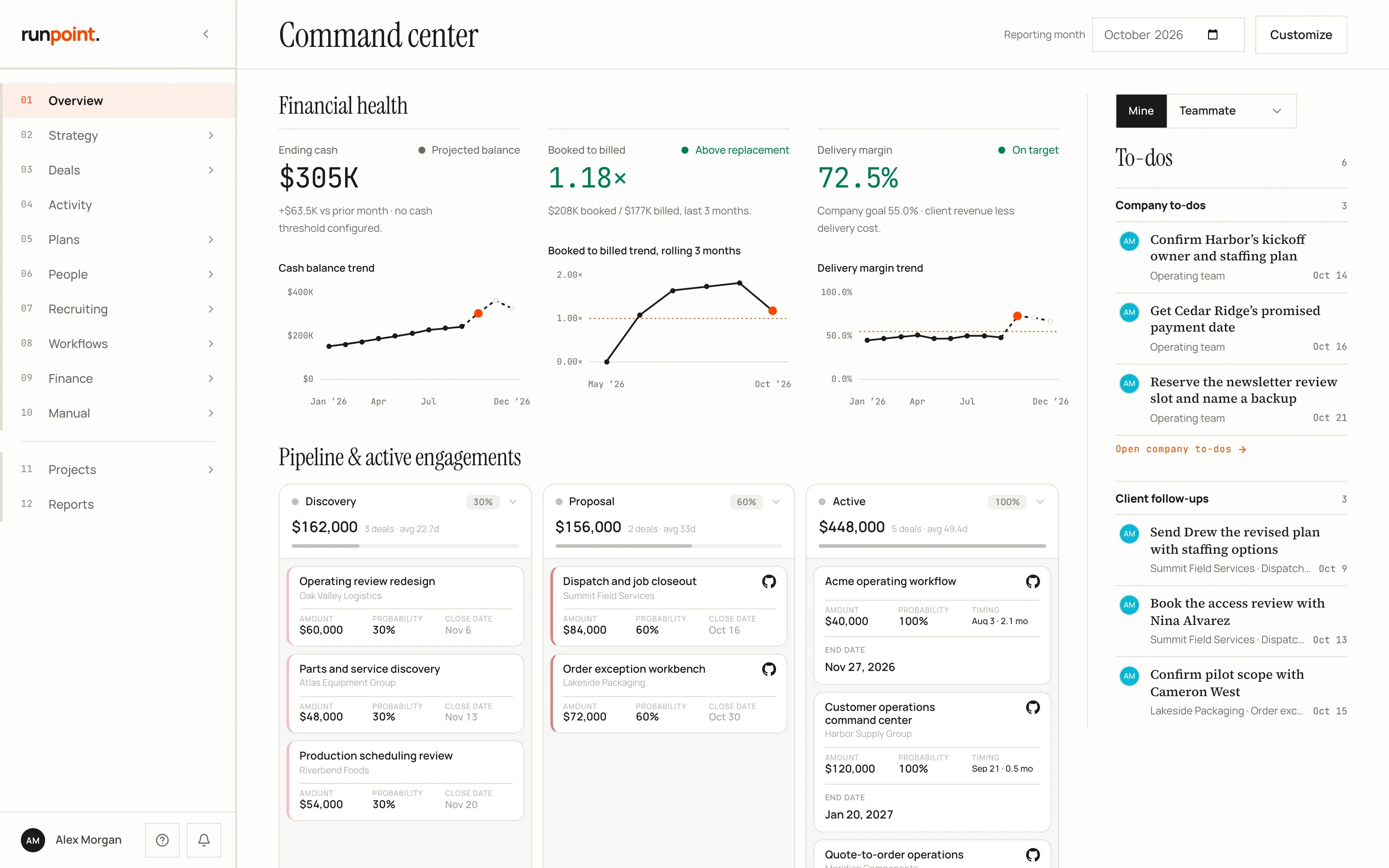
Shown with a sample company's data
Everything your company runs on comes with Foundation™, at no charge.
Each build starts with all of it, then we change what your company does differently and leave out what you don't need.
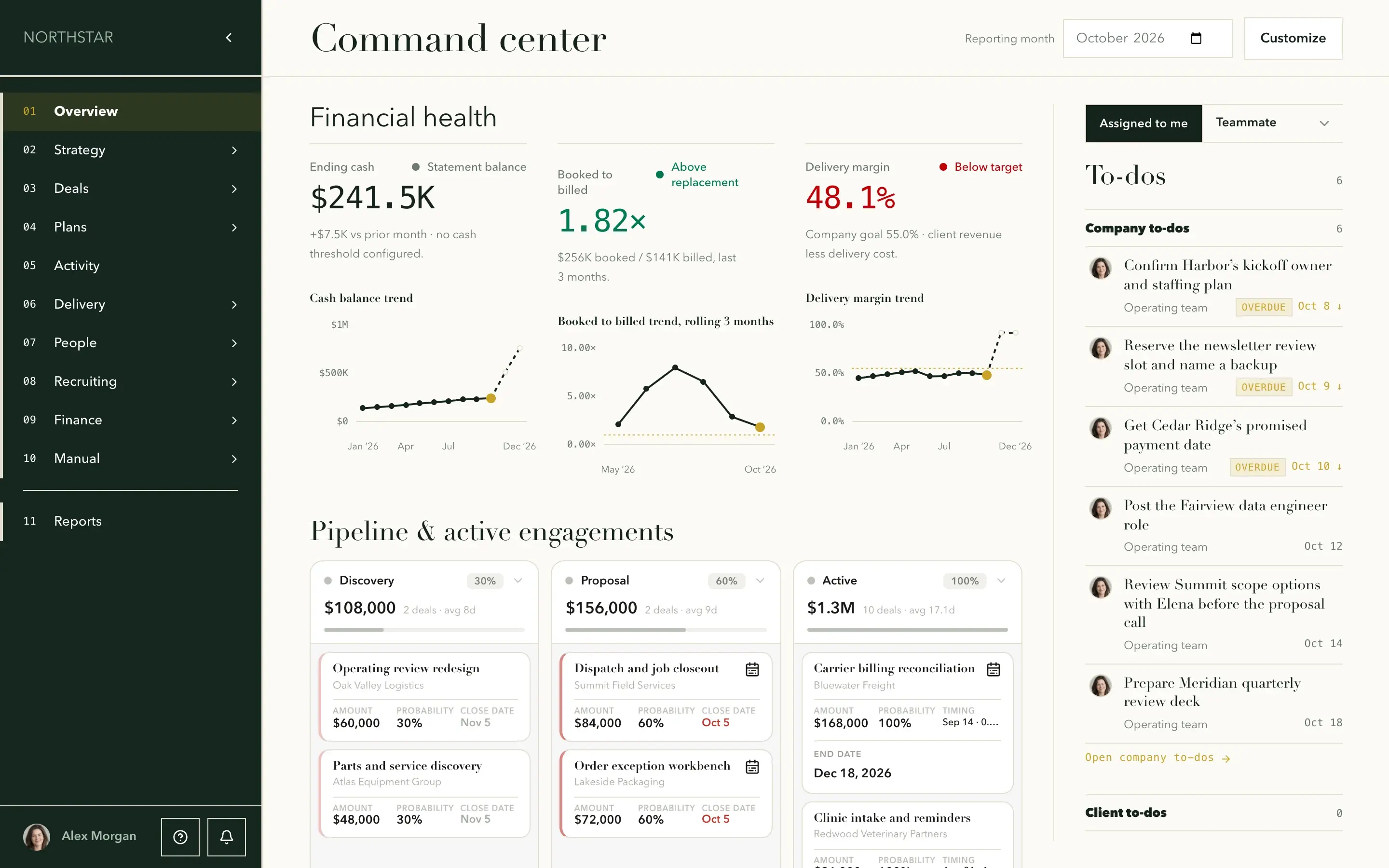
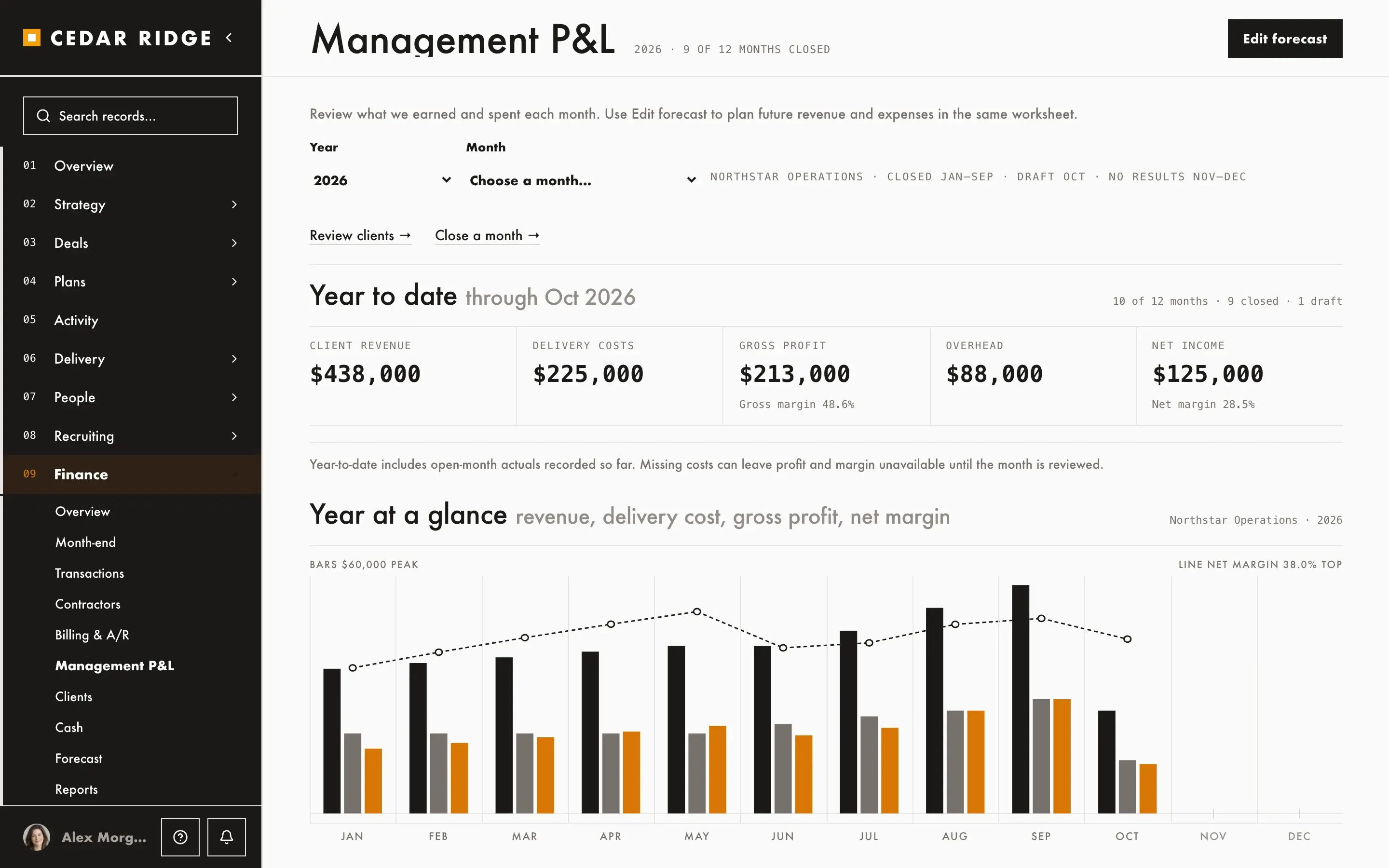
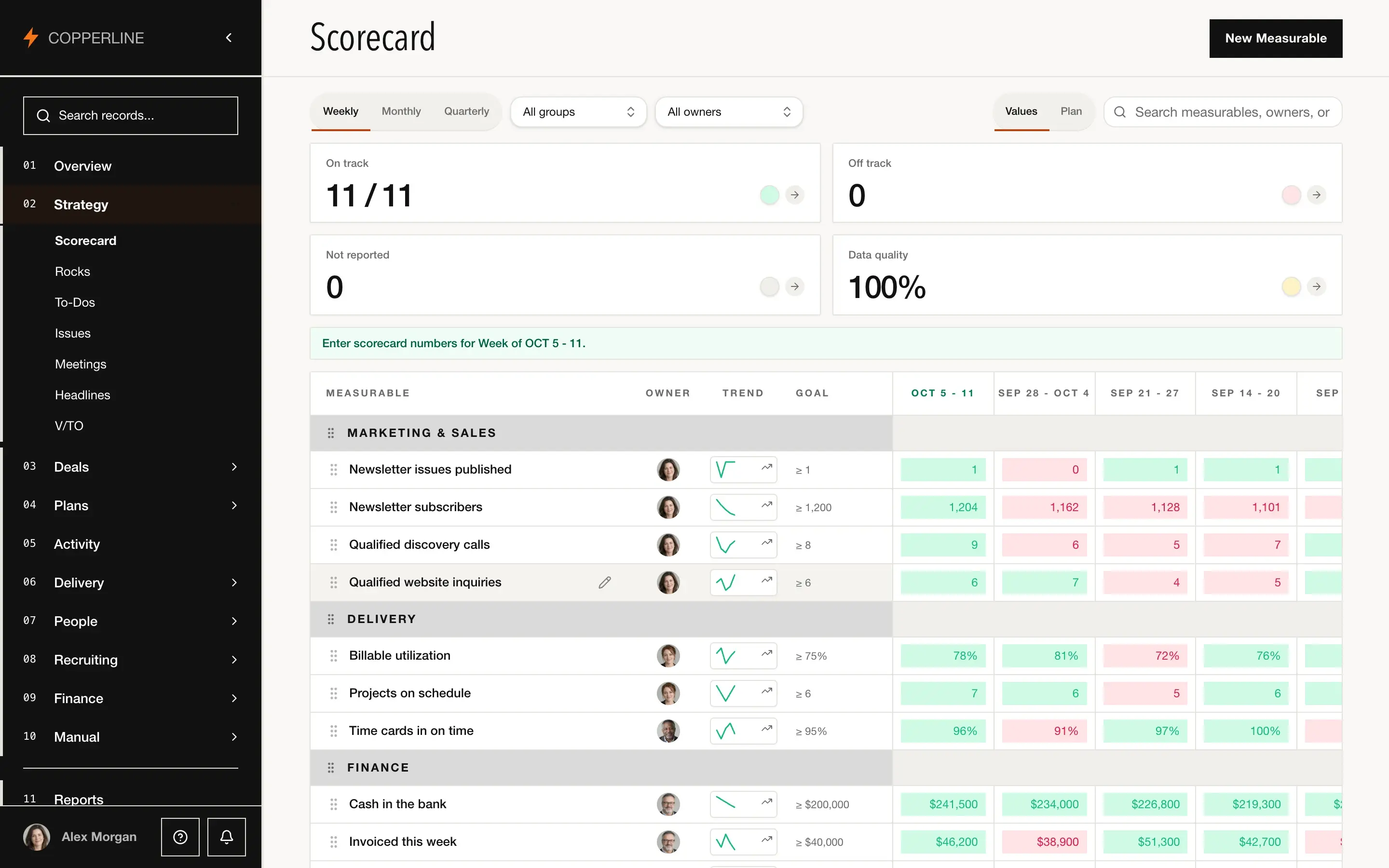
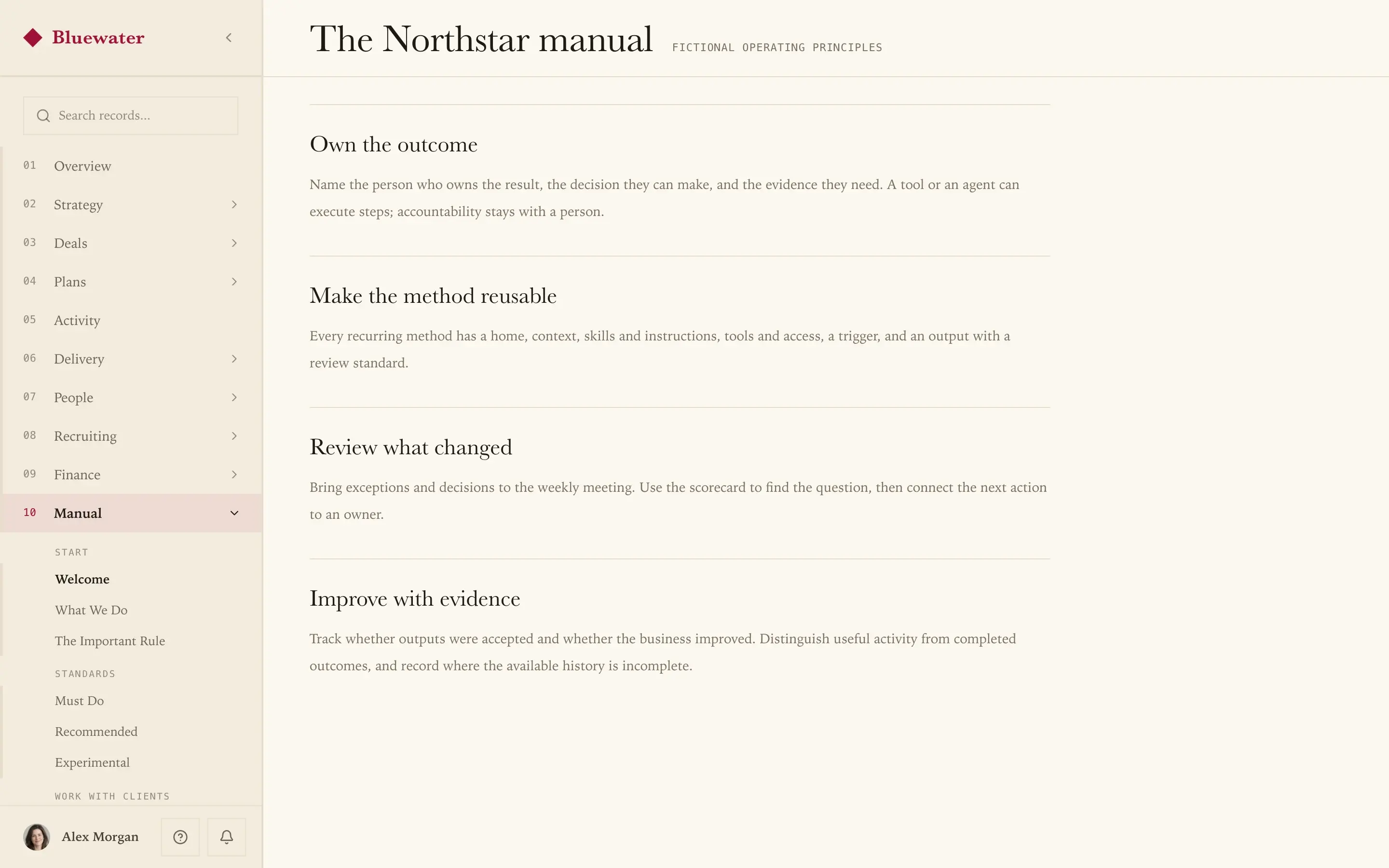
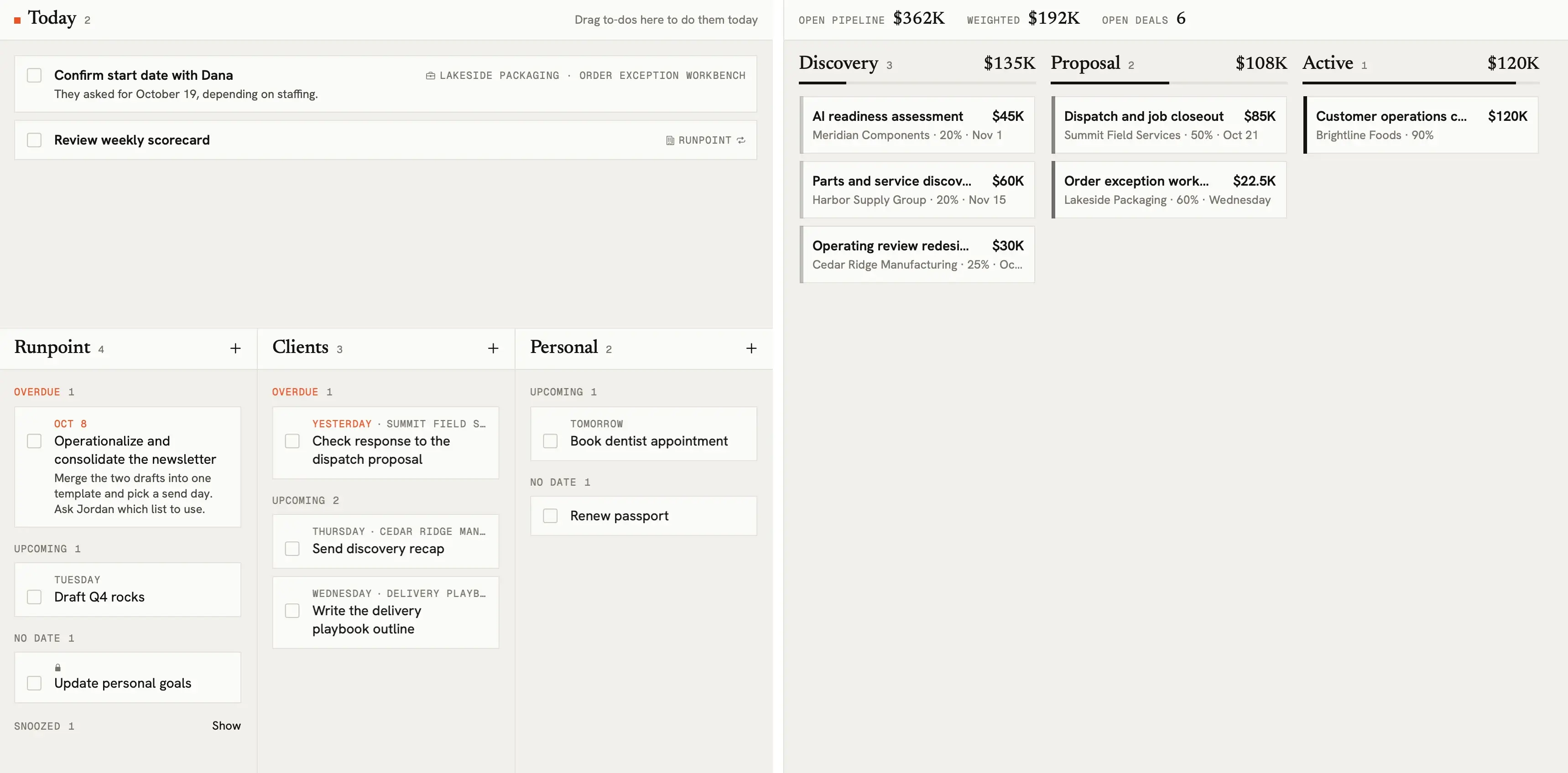
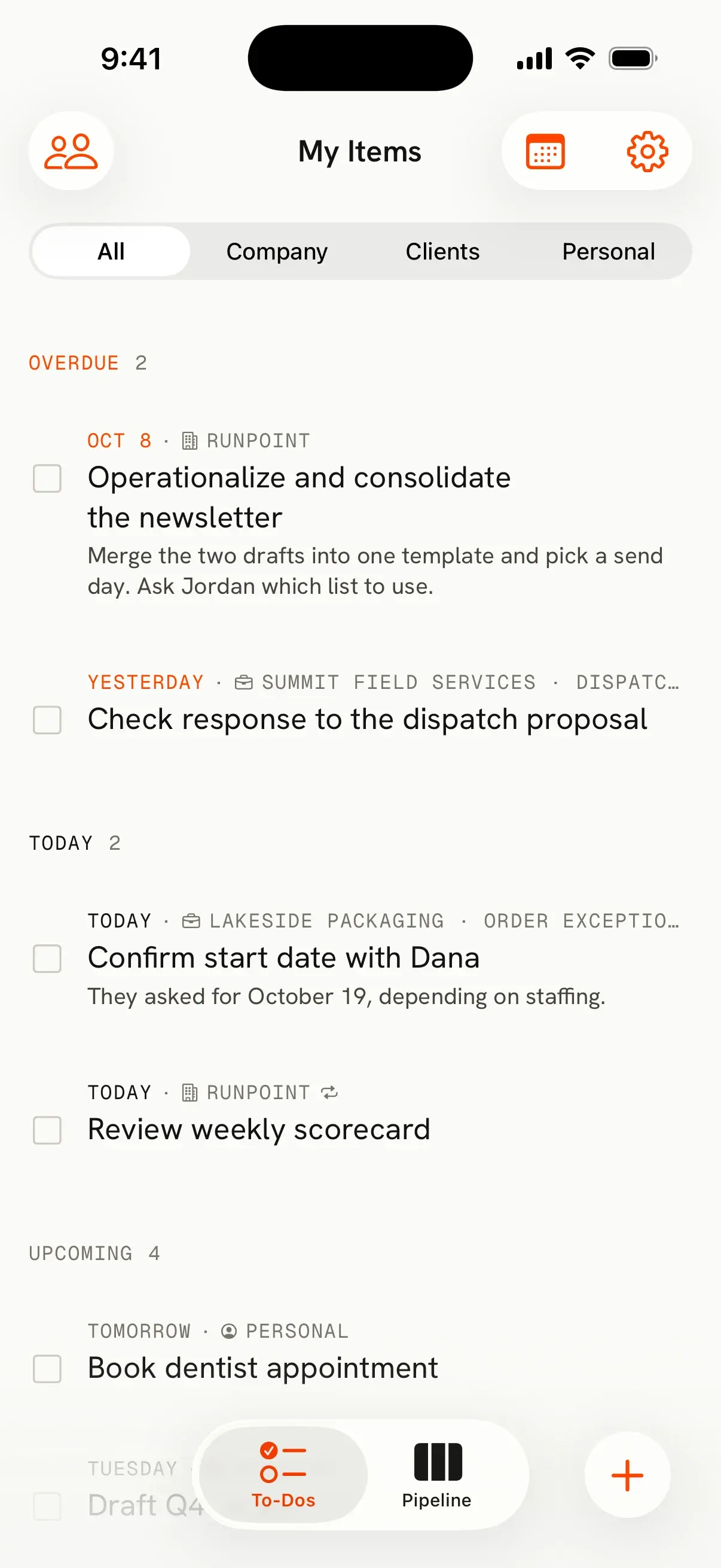
Cash, booked to billed, margin, the pipeline and this week's to-dos on one page for the weekly review.
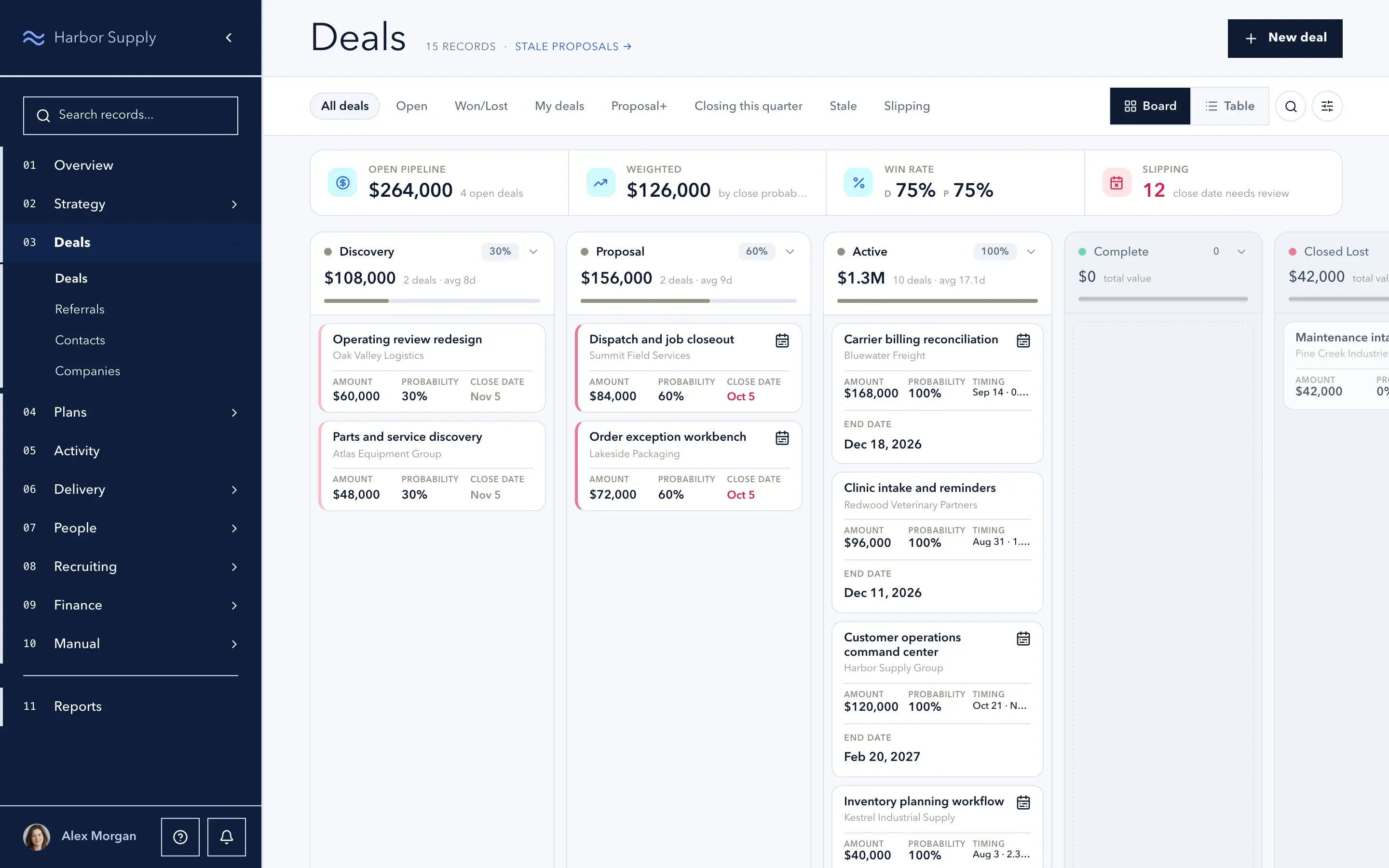
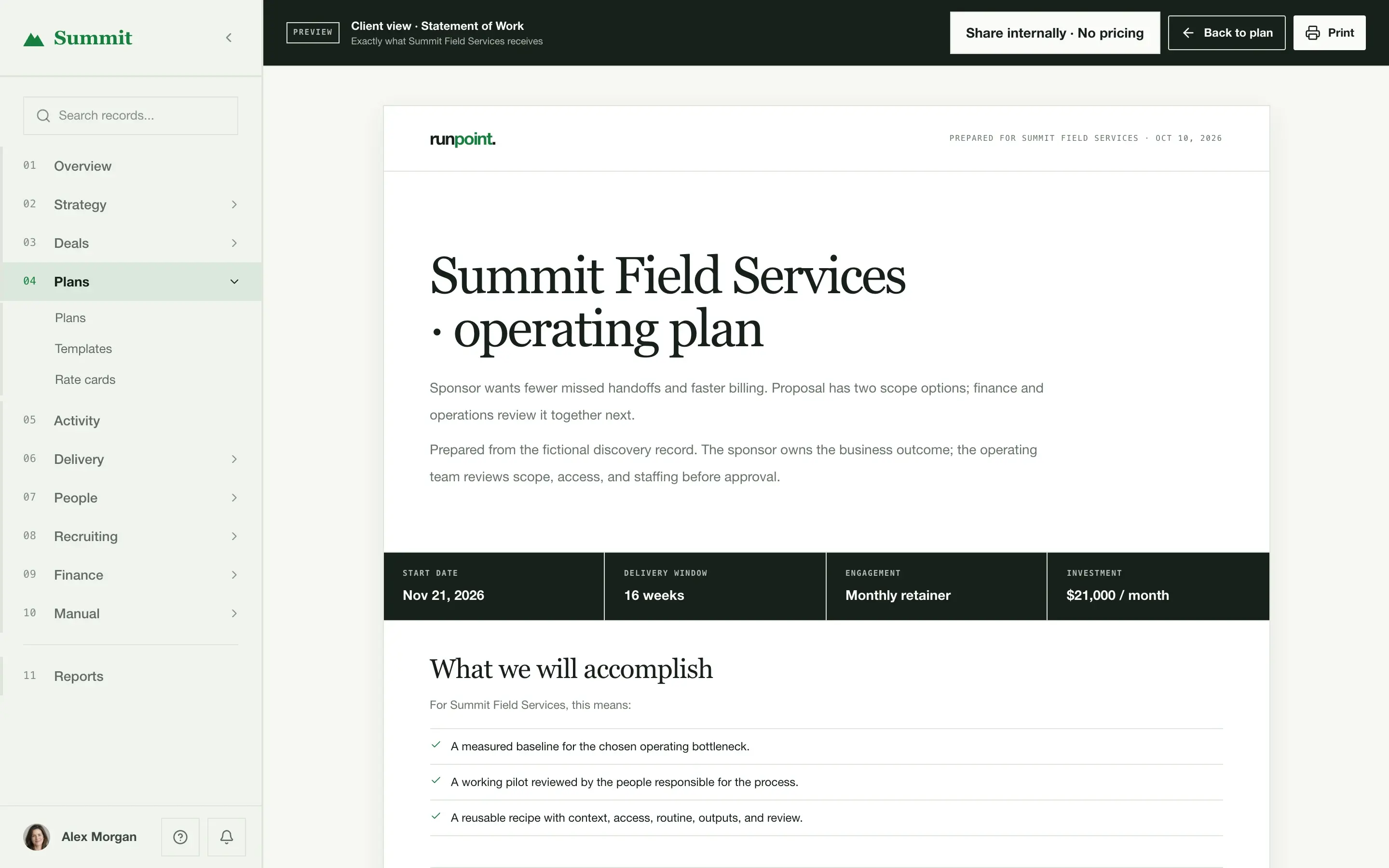
Each screen is shown in a different sample company's colors and type, because yours can look however you want. Everyone shown is fictional.
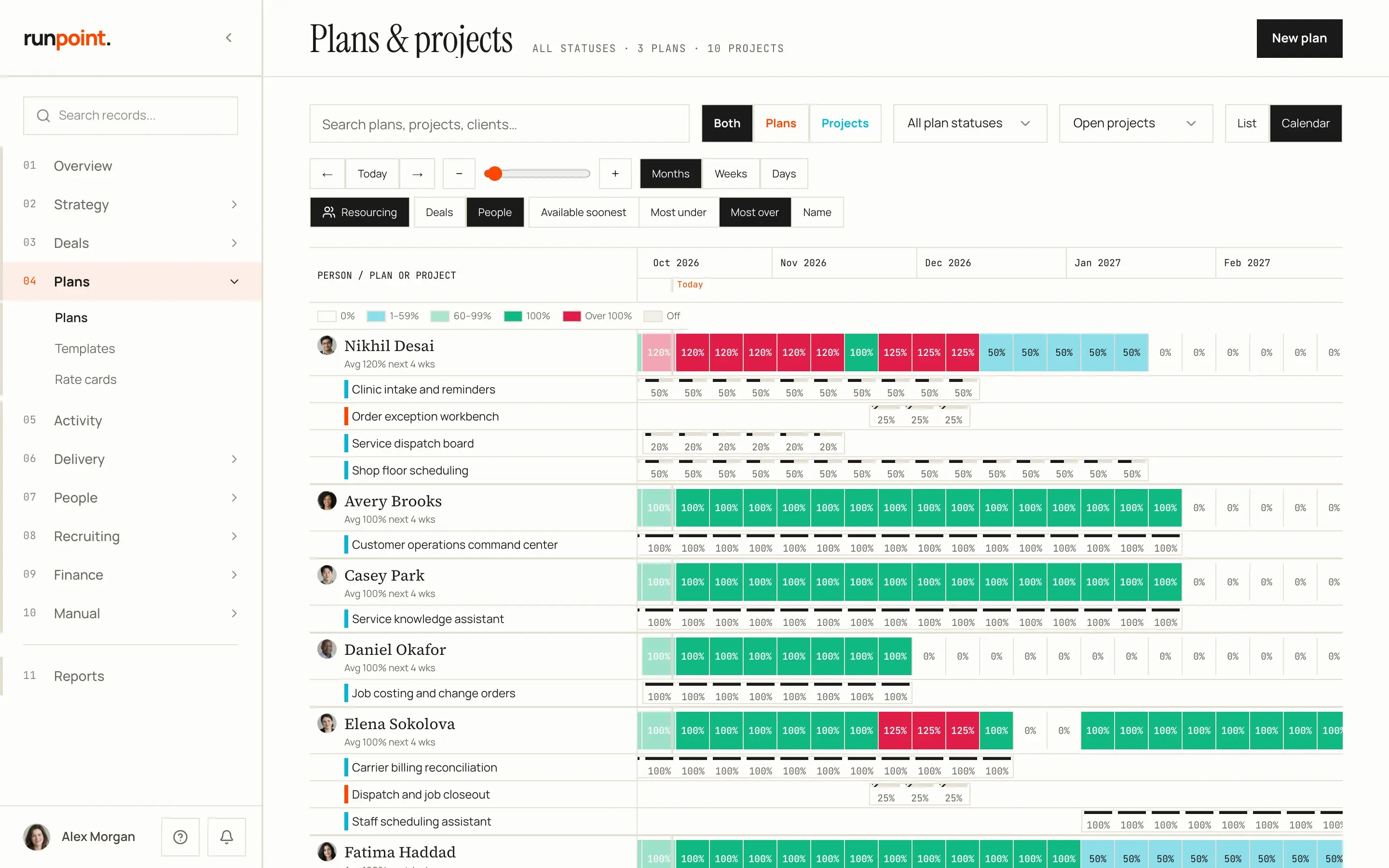
Our latest release, Capacity Planner, shows who has room before you say yes.
Proposals, signed projects and open roles share one calendar, so you can staff the next job before it is sold.
Capacity Planner · 1:18 · Sample data
.01
Everyone's week at a glance
Each person's load is shaded against the hours they have, with every project and proposal they are booked on underneath.
.02
Open roles wait for a person
A role you add stays on the calendar as an open row until someone is booked, with one search across staff and contractors.
.03
Drag to change the plan
Drag a booking's ends to move its dates, or right-click to change the hours or mark it firm or tentative.
.04
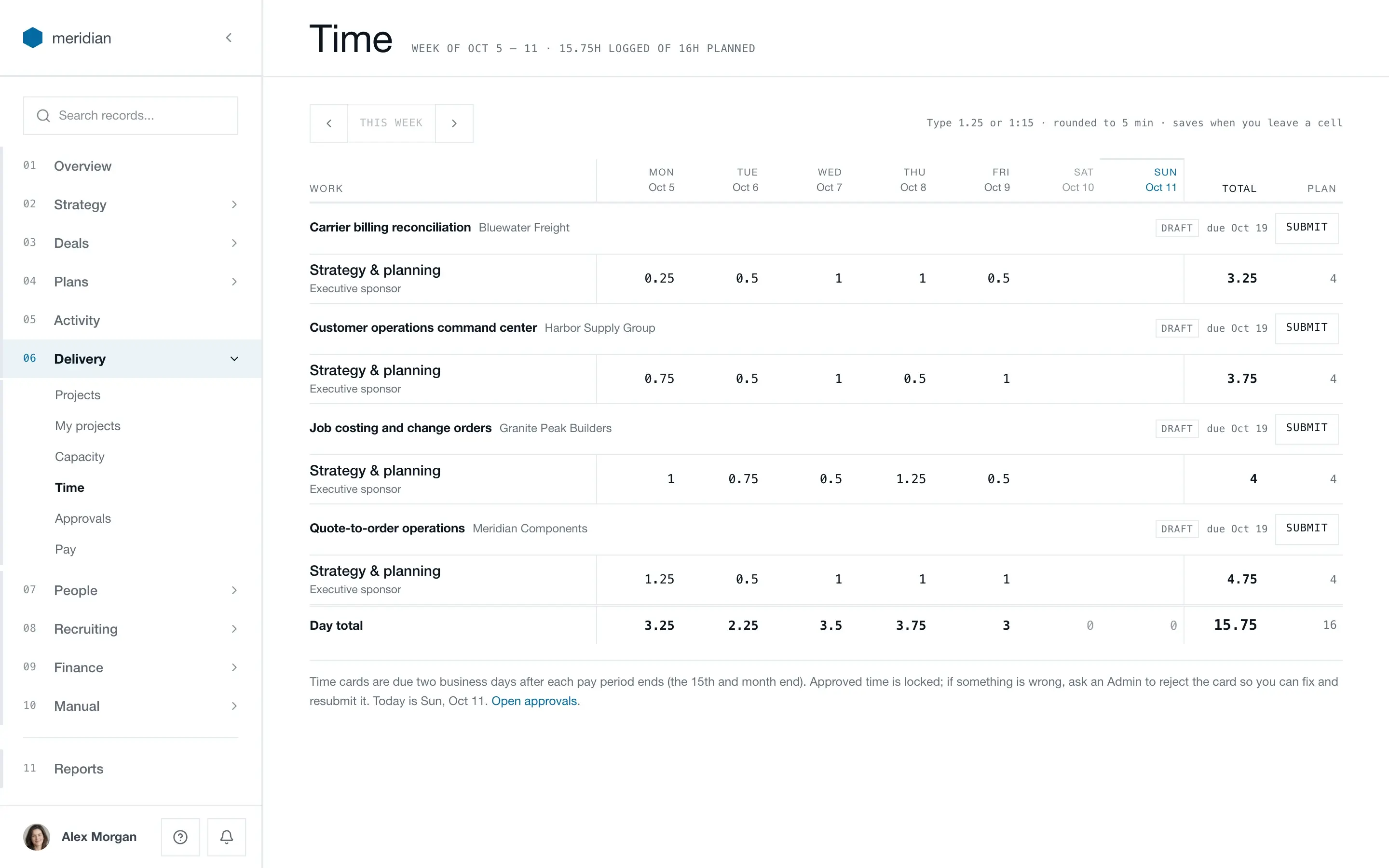
Time and margin follow
Time cards fill in from the schedule, and each project shows hours sold, booked, used and invoiced.
Built for any company that sells the time of skilled people.
We built Capacity Planner to staff our own projects. These are the companies we have seen need it most.

Agencies
Designers, writers and producers across client accounts, so you know who can take the spring campaign before you say yes to it.

Consulting and IT services
Consultants and engineers across engagements, with the roles in unsigned proposals already on the calendar, so a new contract never catches you short.

Architecture and engineering
Hours by project phase against the fee, so a principal sees a job running over while there is still time to fix it.

Accounting and advisory
Partners and staff through busy season, with each client's returns and audits booked against the weeks people really have.

Mechanical and electrical contractors
Crews and technicians across jobs and service calls, so the start date you promise a customer is one you can keep.

Fabrication and custom shops
Welders, fitters and installers across open orders, so you quote a ship date from the hours your shop really has free.
Also in recent releases
Send for signature
Send a proposal and its contract for signature from the deal.
Month-end in six steps
Close the month with the entries behind every number one click away.
Mac and iPhone app
To-dos and the pipeline in your menu bar and on your phone.
Ask Claude
Claude can update deals, plans and the scorecard, with your permissions.
We canceled our own CRM and run Runpoint on Foundation™.
Matthew Hall shows how client relationships, staffing, projects and finance connect, and where AI helps with proposals and onboarding.
Runpoint OS: how we run our business · 1:46Watch on YouTube
1 hour
from a kickoff call to a client-ready proposal, down from two days
4
connected systems: CRM, staffing, applicant tracking and finance
Foundation™ is free, and your copy is yours to keep and change.
You pay once for the work to fit it to your company, and the software stays with you if we ever part ways.
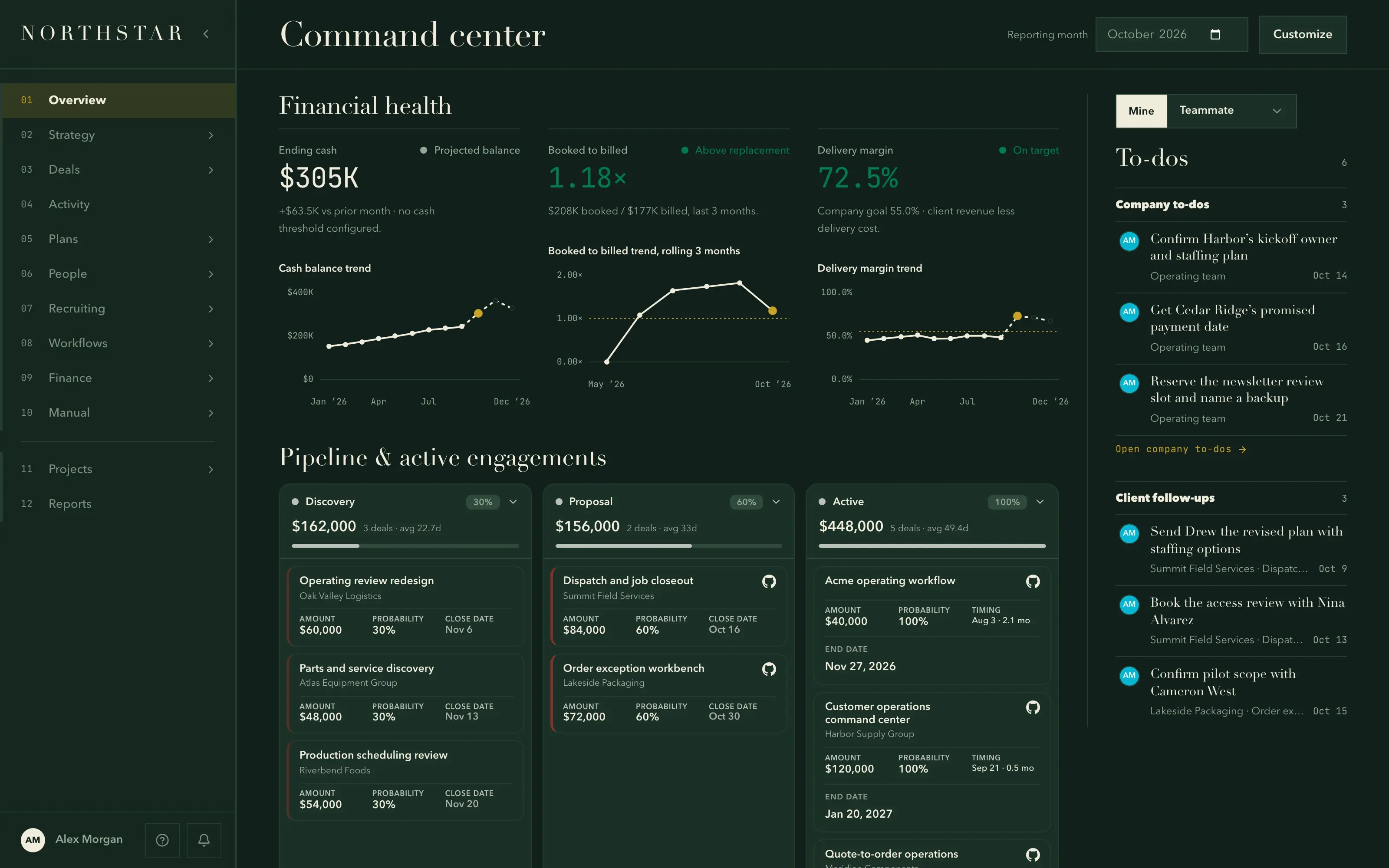
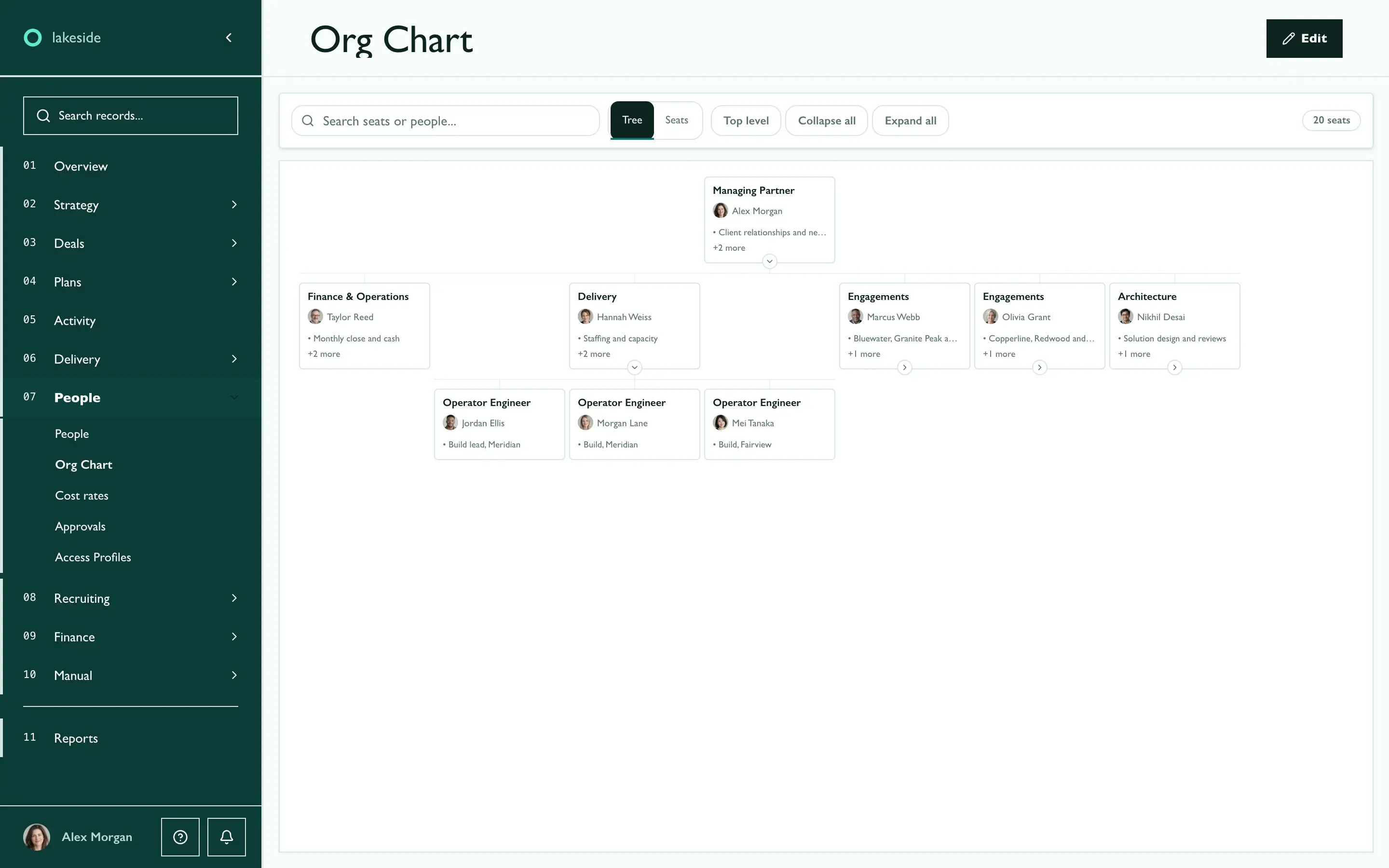
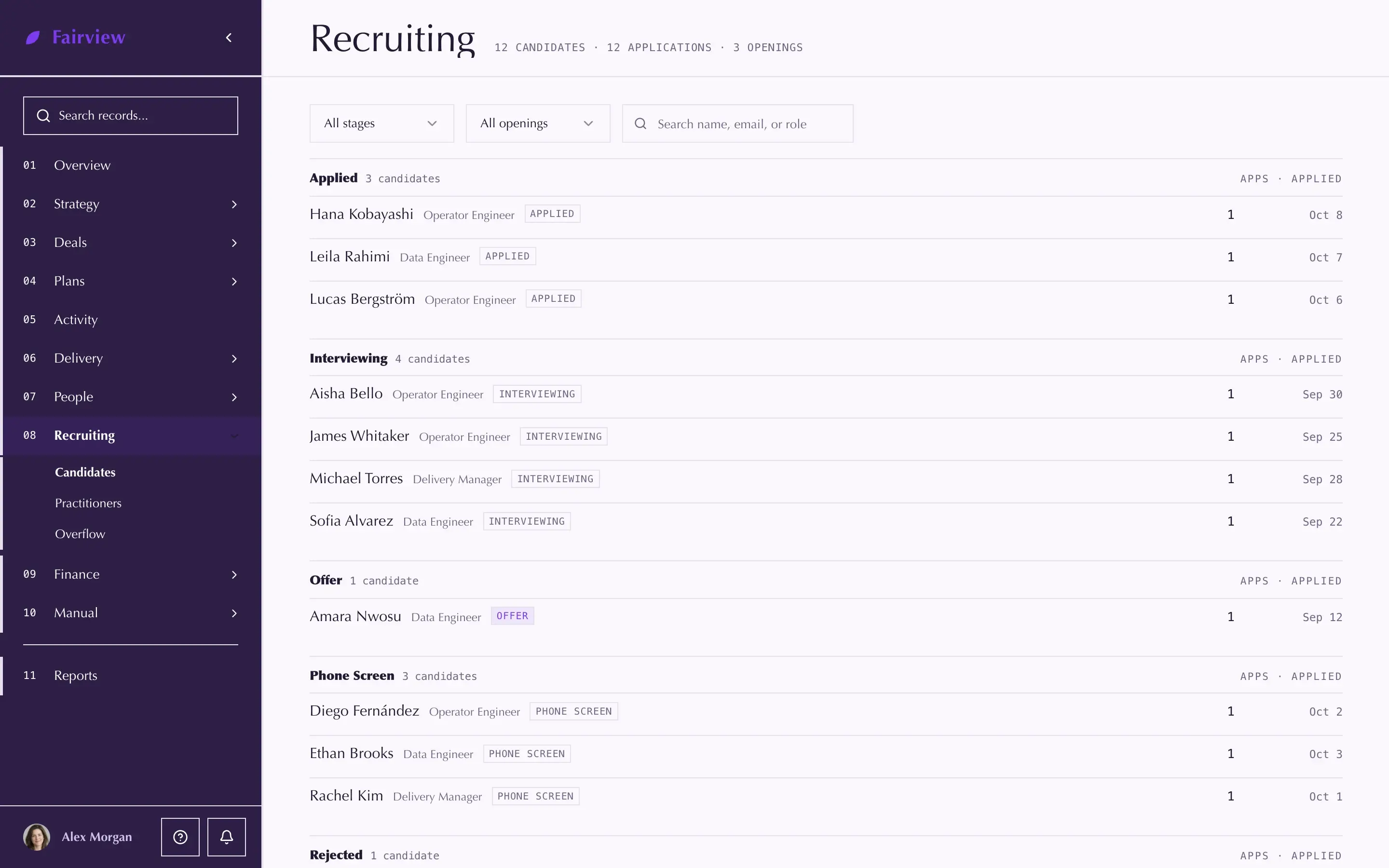
The same system in a client's name, colors and type
- 1No license or seat feesFoundation™ itself costs nothing, now or later, and adding people never adds a monthly charge.
- 2Your name, colors and typeIt can look however you want, and you can change it yourself at any time.
- 3Your recordsCustomers, contacts, jobs, price lists and their history move over from the tools you use today.
Six months from scratch, two to three on Foundation™.
Every build starts from software we have already built, tested and use every day.
Months from kickoff to a working system
Estimate
Source: Runpoint's build estimates
.01
Already built and tested
Sign-in, who can see and change each record, reports and connections to your other tools work before we start.
.02
Proven every day at Runpoint
Foundation™ runs our own CRM, proposals, project plans, recruiting, finances and weekly leadership meeting.
.03
The months go into your work
So the build time goes into the way your company sells, delivers and gets paid.
Questions owners ask about Foundation™.
From owners and operators deciding whether to build.
Yes. There is no license or seat fee, now or later. You pay for discovery and for the build, one fixed fee that fits Foundation™ to your company, and your copy is yours to keep and change.
Every build starts from the latest release. After launch, the person who looks after your system can bring in later releases you want, as part of that work.
Sign-in, permissions, reporting and connections to your other tools. At Runpoint it also runs our CRM, proposals, project plans, recruiting, finances and weekly leadership meeting.
Two weeks of discovery, two days for your leaders to approve the plan, then two to three months to build on Foundation™. From scratch, the same build takes about six.
No. We connect the tools that work well for you and replace the ones that cost too much or fit badly. Replacing an expensive subscription is usually where the payback comes from.
Customers, contacts, jobs, price lists and their history move into the new system as part of the build, so nobody starts from a blank screen.
We plan the switch around when your contracts end. The last weeks overlap with the tools you run today, so your teams switch once the new system works for them.
Yes. We can build in AI that drafts proposals from a kickoff call, keeps the CRM current from meeting transcripts and answers questions in Slack.
Before we finish we choose one of three ways together: we look after it, we train someone on your team to do it, or we help you hire that person.
Which software would your company stop paying for first?
Tell us what you run today, from CRM to scheduling and accounting, and two weeks of discovery will show what replacing it would take and save.