Software that moves the numbers in your value creation plan.
We start with one measurable process, prove the return in the first year, and expand during the hold, without turning the company into a technology project.

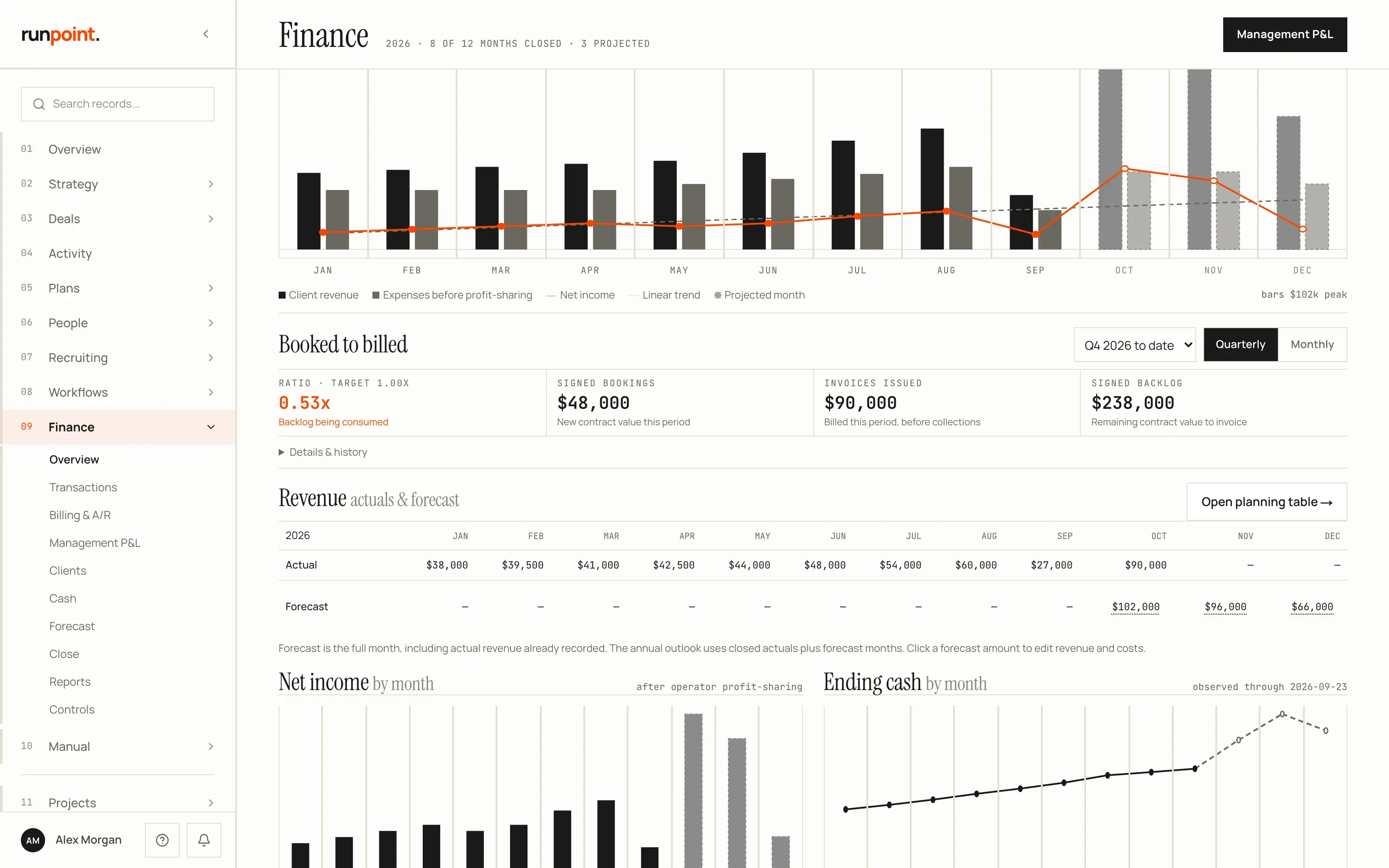
Runpoint Foundation, shown with a sample company's data
Each build has to earn the next one, from the first 100 days to exit.
The board sets the target, management lives with the work, and every step is measured before the next is funded.
- 01Value plan the target · Board
- 02Baseline first 100 days · Management
- 03First build one process · Management
- 04Return measured · Board
- 05Expand build by build · Management
- 06Exit owned, documented · Board
The plan depends on ordinary work that management fights with every day.
.01
Revenue to cash
Sales, operations and finance each keep a different version of the customer and the contract.
.02
Margin
Managers can't see margin slipping until the month has closed.
.03
Add-ons
Each acquisition arrives with another CRM, another ledger and its own definitions.
.04
Board reporting
The package takes days to assemble, and the numbers still disagree.
A first build can retire real costs, like Smith Mechanical's $200,000 in license fees.
The fixed-fee build replaced two rented platforms and paid for itself in its first year, which is the kind of return a sponsor can underwrite.

Smith Mechanical
$200K
License fees retired in the first twelve months
Year one
When the fixed-fee build paid for itself
The right first build is small enough to measure and big enough to matter.
Payroll, regulated systems and a capable ERP stay where they are; we start where owning the software pays back clearly.
- 1Quote to cashOne record from the quote to the collected invoice, so revenue and cash agree.
- 2Margin and capacityManagers see margin and capacity weekly, not after the month closes.
- 3Board reporting from operating dataThe package builds itself from the records people already keep.
- 4Bringing add-ons onto one systemEach acquisition joins the same records and definitions.
A good fit when
- The plan depends on faster revenue, better margin or cash
- Management spends days assembling operating numbers
- An add-on brought duplicate systems and clashing definitions
- The first build can be measured against a clear baseline
Which process is most likely to get in the way of your plan?
Bring us the plan. We'll map the costs, renewal dates and risks, and the work should be useful whoever builds it.