Own the Future
The door where the business model itself changes: start from the two-year vision, ship a wedge early, and de-risk every bet with an owner's discipline.
Most of the growth conversation is about doing more of what you already do. Serve more customers with the same people. Turn a two-week deliverable into a two-day one. Raise output per hour and let it compound. That is real, and for many companies it is enough.
It is also not the ceiling. Some businesses are going to transform: ship products and services that did not exist before, offer things that were uneconomic or simply impossible a few years ago, enter markets they could never have reached. This is the door where the business model itself changes.
Here is what we have learned talking to owner-operators: most of them already carry some version of this vision. They can describe the company they wish they were running. What they lack is a way to know whether the vision is actually possible now, and a path to it that does not bet the company. That is our job. We tell them whether it can be done, and then we de-risk the way there.
How the work runs
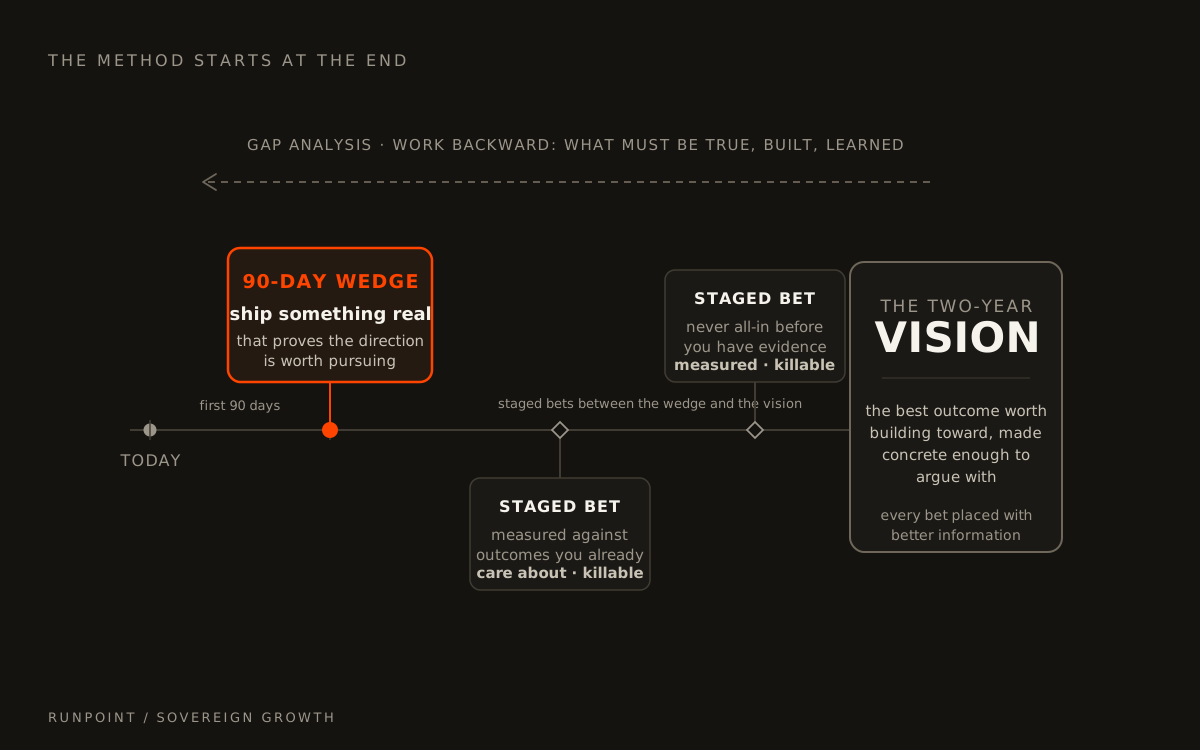
The method starts at the end. We begin with the two-year vision of the best possible outcome, the version of the business worth building toward, and we make it concrete enough to argue with. Then we work backward from it. A gap analysis says, plainly, what stands between here and there: what has to be true, what has to be built, what has to be learned.
From that gap we prioritize around a wedge. The wedge is something shipped in the first ninety days that moves the business toward the vision and proves the direction is real. It is the opposite of a two-year plan you cannot check until year two. You get a working thing early, you learn from it, and every bet after it is placed with better information.
Then we de-risk the bets along the way. This is genuine innovation work, but run with an owner's discipline rather than a lab's open-ended budget. Bets are staged, so you are never all-in before you have evidence. They are measured against outcomes the business already cares about, not vanity metrics. And they are killable: if a bet stops earning its place, it ends, and the resources move to one that is working. Innovation gets a bad name when it means spending for years on faith. Done with discipline, it is a series of small, honest tests, each one cheaper than the wrong answer.
What it looks like in practice
One example, described carefully. A professional services firm had a set of offerings that were expensive to deliver. The economics only worked above a certain size of client, so there was a floor below which the firm simply could not serve anyone profitably. We worked with them to automate the high-cost-to-serve parts of that work. As the cost of delivery came down, the floor came down with it, until the firm could profitably serve a segment of the market that had always been out of reach.
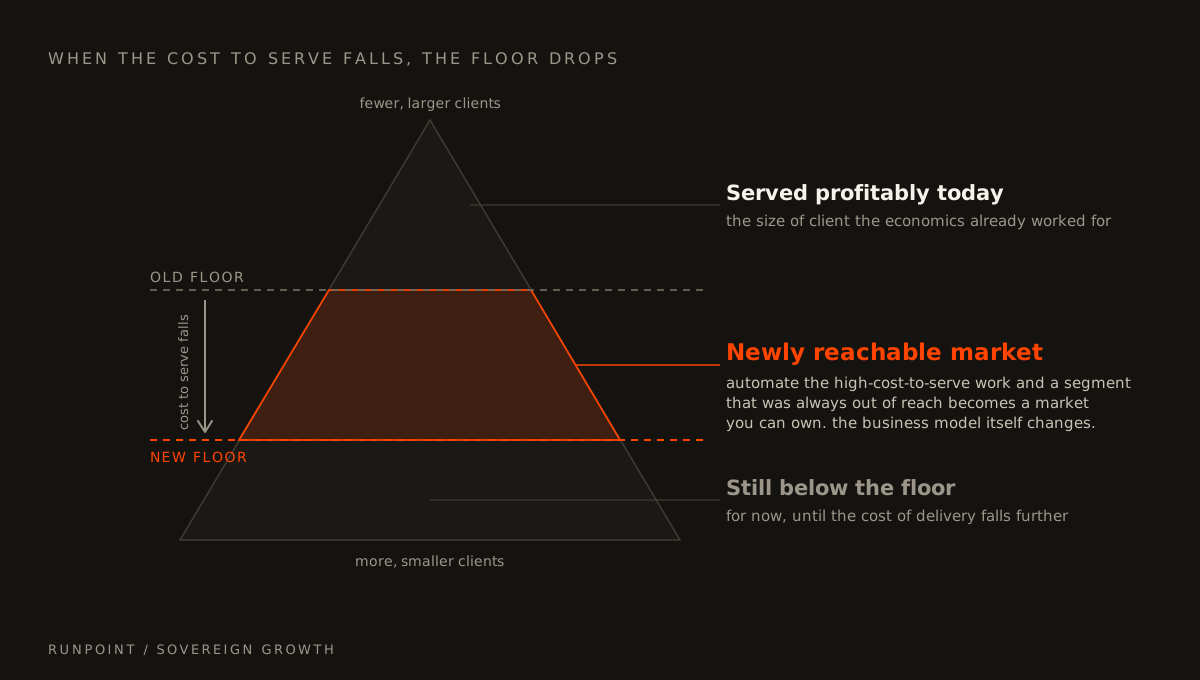
Efficiency was only the means. The point is that the business model changed. A market that was uneconomic to serve became a market they could own. That is the kind of swing this door is for.
The economics, and where this fits
Exploratory work carries more uncertainty than the earlier doors, so we structure it differently. Rather than charge the full cost of the research up front, we share in the upside it creates. That keeps the outlay reasonable for the owner and keeps our incentives pointed at outcomes that actually land. We are betting alongside you, not billing you to watch us try.
This door opens after the ground underneath it is solid. When the plumbing is owned, the business runs on systems it controls instead of software it rents. When the edge is encoded, the company's real knowledge and workflows live in its own infrastructure, with the model as a swappable part. Those two make the swings safer, because you understand your own operations well enough to know which bets are worth taking, and you own the ground you are jumping from. Take a big swing on rented systems and half-understood data, and you are gambling. Take it on owned plumbing and an encoded edge, and you are investing.
That is the whole arc of sovereign growth. Own the way you run, encode what only you know, and then use that footing to build things that were not possible before. The future is worth owning too.