We Have to Grow Our Way Out of This
Tyler Cowen says AI can lift American growth by the half point the debt math needs. The talk, the numbers behind it, and why the growth will come from the middle.
This spring, at a summit inside the New York Public Library, the economist Tyler Cowen gave a talk whose title does a lot of work: AI will improve our economy, but will we let it? Cowen is nobody's hype man. He has spent a career pouring cold water on big claims, which is what makes the argument he laid out that afternoon worth your attention: AI can plausibly lift American growth by about half a point, and the main thing standing in the way is us.
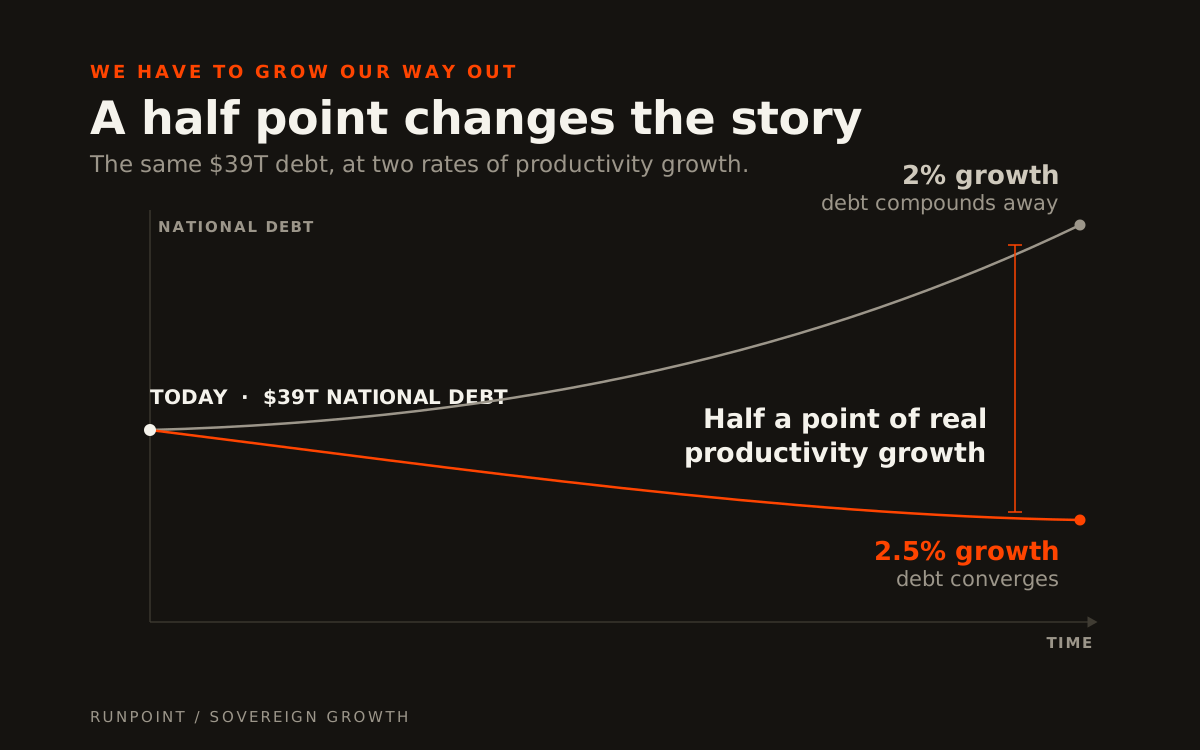
Half a point does not sound like much until you understand two things: what the word productivity actually means, and what half a point is currently worth to this country.
Start with the word, because almost everyone gets it wrong. People hear productivity and think busyness. Inbox zero, the packed calendar, running against the clock, staying on top of the list. A whole industry of hacks exists to make you feel more of it. That is not what the word means. When economists say productivity, they mean more value coming out per hour of human effort going in. Output, not motion. GDP is just that number, summed across everyone. Most productivity advice, and frankly most corporate AI so far, optimizes the feeling of motion. A copilot in the corner of every screen makes people faster at the busyness. The number that matters, value out per hour in, barely moves.
Now the stakes. The United States owes thirty-nine trillion dollars, and the interest alone now costs more than the defense budget: nearly a trillion dollars a year, second only to Social Security among federal outlays, on track to double within a decade. In the talk, Cowen makes the arithmetic plain. At two percent growth, the debt compounds into a generational fight about what to cut. At around two and a half, it converges to something manageable. Half a point of real productivity growth, sustained, and the story changes. He also attached a warning: forty to fifty percent of the economy, the institutional sectors, will barely absorb AI at all. Whatever growth this technology produces will come from the competitive part of the economy or it will not come at all.
There is precedent for a technology moving this number, and it cuts both ways. When American businesses actually put cheap computing and the internet to work in the mid-1990s, productivity growth roughly doubled, from about a percent and a half a year to a pace the country had not seen since the early seventies. After 2004, the surge faded. The number rose while companies were rebuilding how they worked, and it stopped rising when the rebuilding stopped. That is worth remembering every time someone tells you the technology will do the work by itself.
Here is the part we have staked our firm on, the part you will not hear from the economists.
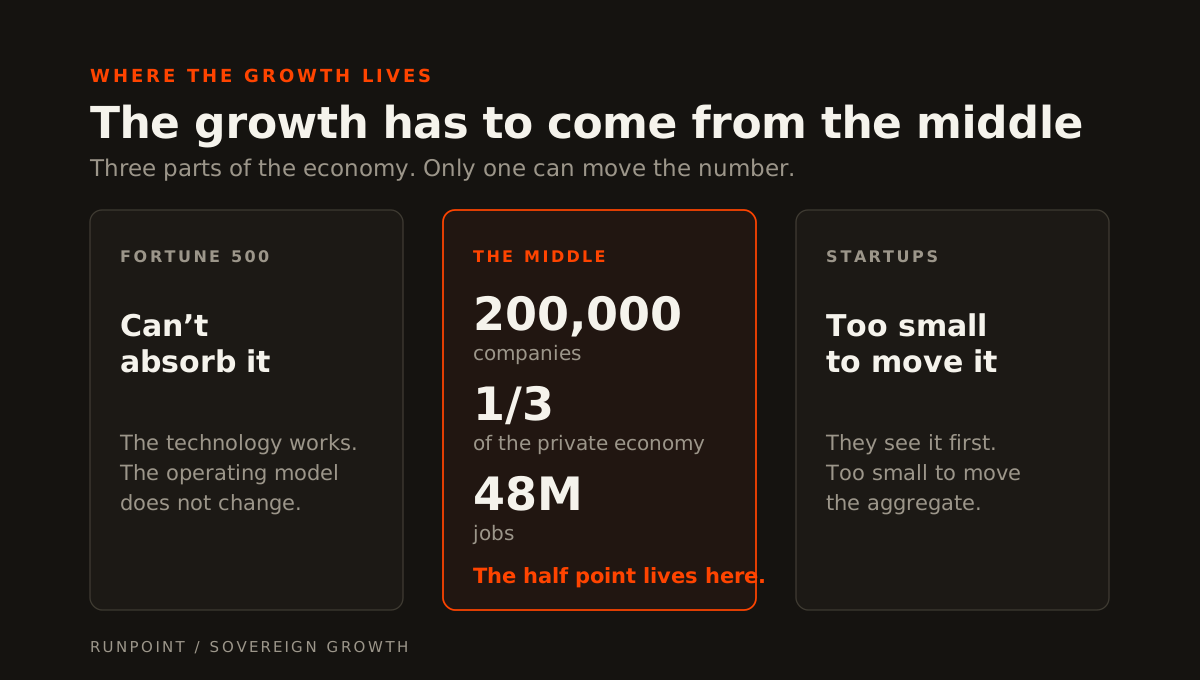
The growth will not come from the Fortune 500. The technology works fine there; the operating model does not. Committees buy AI, risk reviews scope it, vendors bolt it onto the same rented systems, and two years later the way the business actually runs has not changed. More busyness, faster. Output flat.
It will not come from startups either. They see it clearest and move the fastest, and they are simply too small to move a twenty-eight trillion dollar economy this decade.
That leaves the middle. Roughly two hundred thousand American companies between ten million and a billion in revenue. A third of the private economy. Forty-eight million jobs. The distributors, contractors, clinics, trainers, manufacturers, and services firms that employ your neighbors. Small enough that the CEO can decide something on a Tuesday and see it live by Friday. Big enough, together, that when a hundred thousand of them raise real output ten percent, the national number moves. The half point lives in the middle.
Cowen's talk ends up somewhere close to this on its own. He does not predict mass unemployment; he predicts a premium on the human parts of work, the people who show up in person and carry a room. And he argues that in an age of cheap intelligence, initiative becomes the scarce input. We would put it more concretely. The constraint is the person with enough initiative to sit with a dispatcher for an afternoon, understand why the workflow is the way it is, and rebuild it so the machine does the part machines should do, measured against a number the business actually cares about. That job barely has a name yet. We call it the operator-engineer, and finding, training, and deploying those people is the real bottleneck on the growth rate of the United States.
Cowen closed on the question in his title: the technology will improve the economy, but will we let it? At the scale of a country, that is a question about institutions. At the scale of an owner-operated company, it is a decision about how the business will use this moment. Our master plan is the answer we have staked the firm on.
We started Runpoint from scratch on the other side of this transformation, on purpose. No legacy business to protect, no old model to defend. A handful of people who love the work and each other, tied to exactly this mission. The moment will end. That is what makes it a moment.