The Alpha Layer
Intelligence is becoming a utility. Your edge is the knowledge, data, workflows, and agents you feed it. Own that layer, and rent the model like electricity.
Intelligence is getting cheaper every quarter. You can rent the best model in the world for less than a software seat, and so can everyone else in your industry. If the intelligence itself is becoming a utility, like electricity, what makes the work yours?
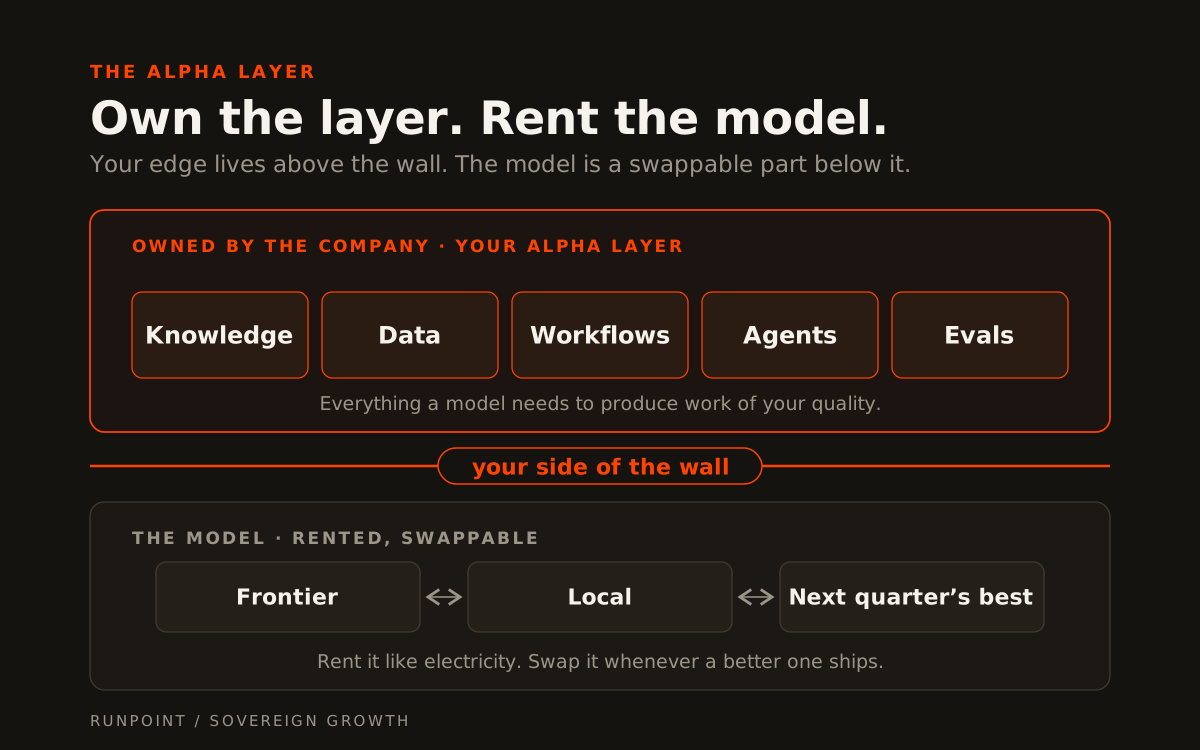
The answer is your alpha. In investing, alpha is the return you earn above the market. A business has an equivalent: the people, SOPs, data, distribution, and hard-won judgment that let it perform differently from its competitors. As the owner-operator, it is up to you to name what yours is.
We call the place where that edge gets encoded the Alpha Layer. It is the knowledge, the data, the agents, and the automated workflows that a model consumes in order to produce work of your quality, not generic quality. A frontier model is brilliant and completely interchangeable. It knows everything in general and nothing about you in particular. The Alpha Layer is everything you feed it so that what comes out the other side could only have come from your company.
You already have the data. It is just stuck.
The most common thing we hear from mid-market CEOs is that they do not have a data advantage. No data lake, no analytics team, nothing that looks like the asset the AI companies talk about. They conclude they are out of the game before it starts.
That conclusion confuses organized data with useful knowledge. The raw material is already in the workflows, the deliverables you have shipped for fifteen years, and the judgment of the person who has run the estimating desk since before the current software existed. It sits in people's heads, spreadsheets, and documents nobody has opened in years. It is proprietary and valuable. It has simply never been put in a form a model can use.
Getting it out of heads and off of scattered documents and into context that a model can draw on: that process is the Alpha Layer. You are not buying data you lack. You are creating a usable asset from data you already own and have been sitting on the whole time. That is what it means to create data where there was none.
Why you cannot let someone else hold it
Every frontier lab is racing to capture this layer, and the reason is simple and rational: the more of your context they hold, the more useful they become to you. Anthropic offers managed agents that remember you, projects, Cowork. OpenAI is building much the same. Gemini starts with a natural lead, because so much of your context may already sit in Google Docs and email, and in principle it could be surfaced there and nowhere else.
None of this is a criticism. We rent frontier intelligence happily, and these are genuinely good products that get better the more you use them. That is exactly the point to be clear-eyed about. A layer that improves as you feed it, and that lives inside one vendor's walls, is a layer that quietly builds lock-in. Everything about you and what makes you you accumulates on their side of the line, and over time it gets harder to leave.
Few mid-market companies will ever be hurt by the dramatic version, a lab stealing their secrets. The real danger is mundane: two years from now you want to move, and switching costs 5 to 10x what you expected, because everything that makes your operation yours got wound around infrastructure you do not control. So you stay, and you pay.
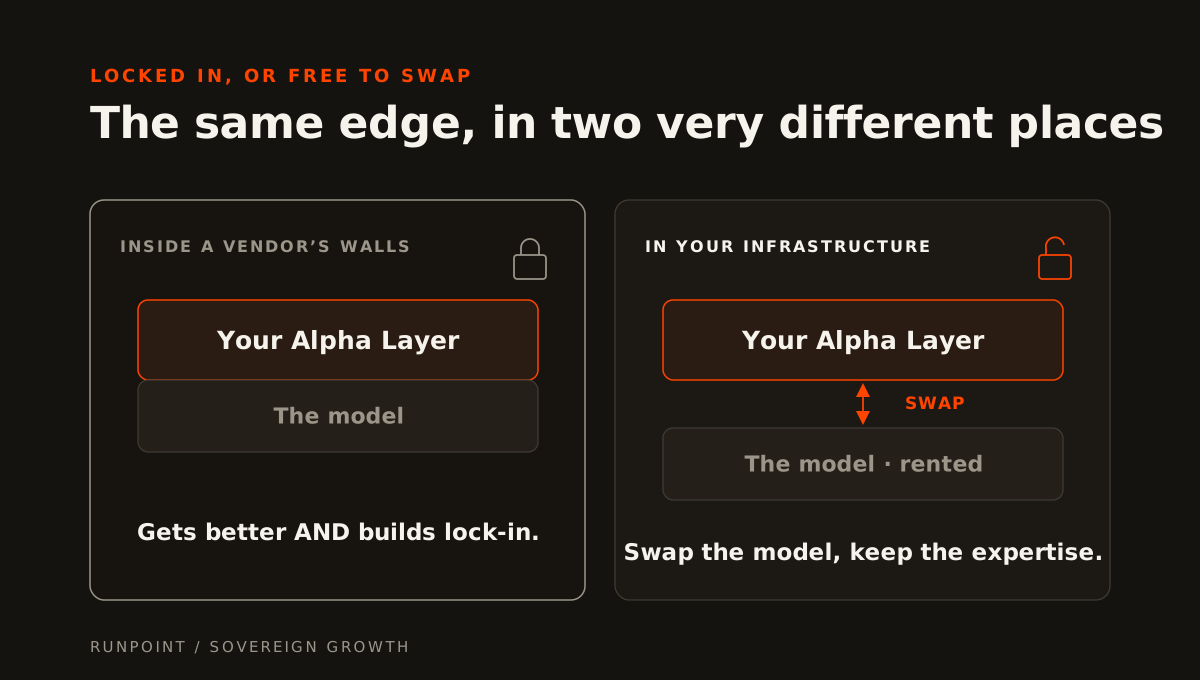
The alternative is to make the layer agnostic. Keep your knowledge, data, workflows, and agents in your own infrastructure, and treat the model as a swappable part, frontier today, local when it is the smarter buy. Agnosticism gives you optionality: you rent the best model each quarter from whoever sells it best, and you owe none of them your operation. It also, and this matters more than it sounds, makes the layer worth investing in. You build with conviction on ground you own, not on rented land you might have to abandon. This is the first of the three tests in practice: you should be able to swap the generalist model underneath and keep the company-veteran expertise on top.
It is never finished
The last misconception is the most expensive one, because it looks like diligence. People treat building agents and workflows as a one-time project. Scope it, build it, ship it, done.
It does not work that way, and you already know it does not, because nothing else in your business works that way. Your products got better over years. Your services got sharper with every engagement. The Alpha Layer is the same kind of thing. SOPs change. The work changes. What makes these systems genuinely good is incremental change management and steady refinement measured against evals you trust, the same way you would improve anything else you care about. There are no set playbooks, because a playbook that fit your business perfectly would have to be written by someone who has run your business, and nobody has but you. Anybody selling you a package of twelve skills is a liar.
That is why ownership pays. The Alpha Layer improves as your people use it, correct it, and teach it. You want those improvements accumulating on your side of the wall.
The model will change. The Alpha Layer should come with you. That is its place in the sovereign growth plan.