Own the Plumbing
Most owner-operated companies have never seen their software bill whole. Owning the workflows that run the business starts with one honest teardown.
We once sat down with the CEO of a multi-site education company and put their software bill on one page. Nobody at the company had ever seen it whole. Fifty-one live systems. One and a half million dollars a year, give or take a hundred thousand. Three quarters of that money sat in just ten of the fifty-one lines, and the long tail underneath was a museum of tools somebody had signed up for and half-forgotten.
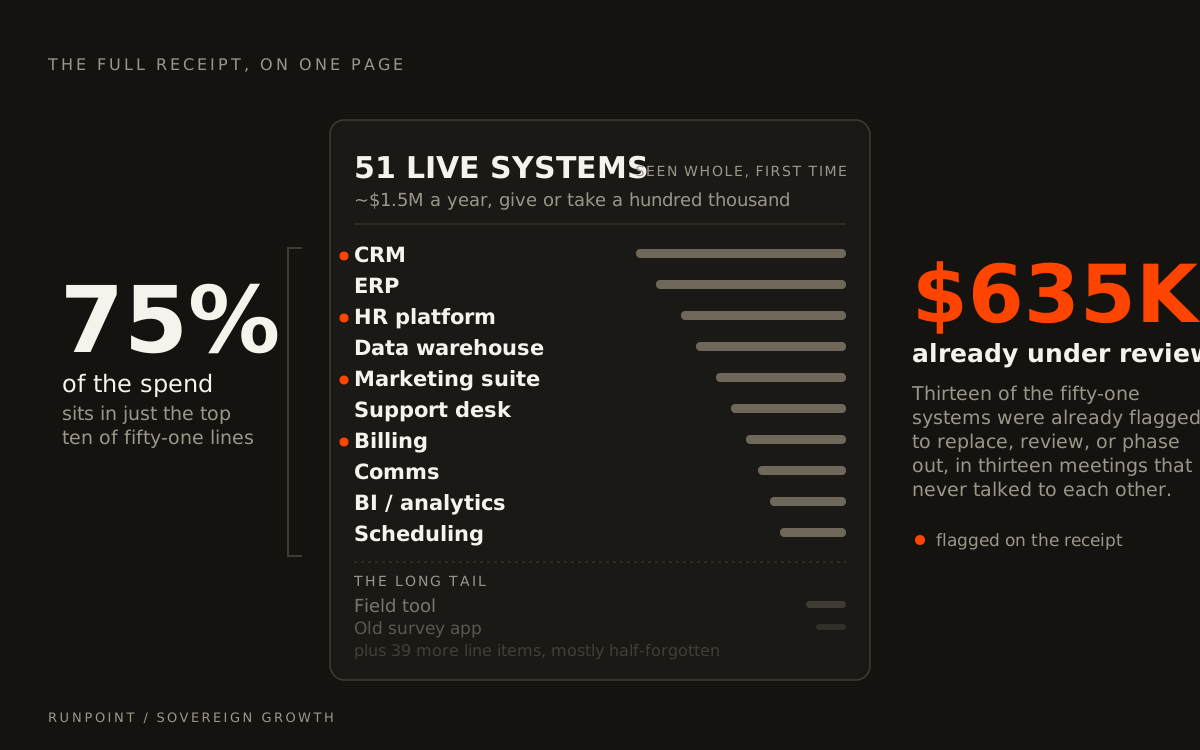
Then came the part that changed the room. Thirteen of those systems were already flagged inside the company as replacing, under review, or phasing out. Six hundred and thirty-five thousand dollars of annual spend was sitting in their own decision window before we ever walked in. They were already half-deciding this, one renewal at a time, in thirteen separate meetings that never talked to each other. What they had never done was look at the whole thing at once and ask which of these we should own instead of rent.
That is the moment. Most owner-operated companies are closer to this decision than they think. They have just never had anyone hold up the full receipt.
What we do not touch
Here is the part that earns the rest. Most of that stack should stay rented, and we will be the first to tell you so.
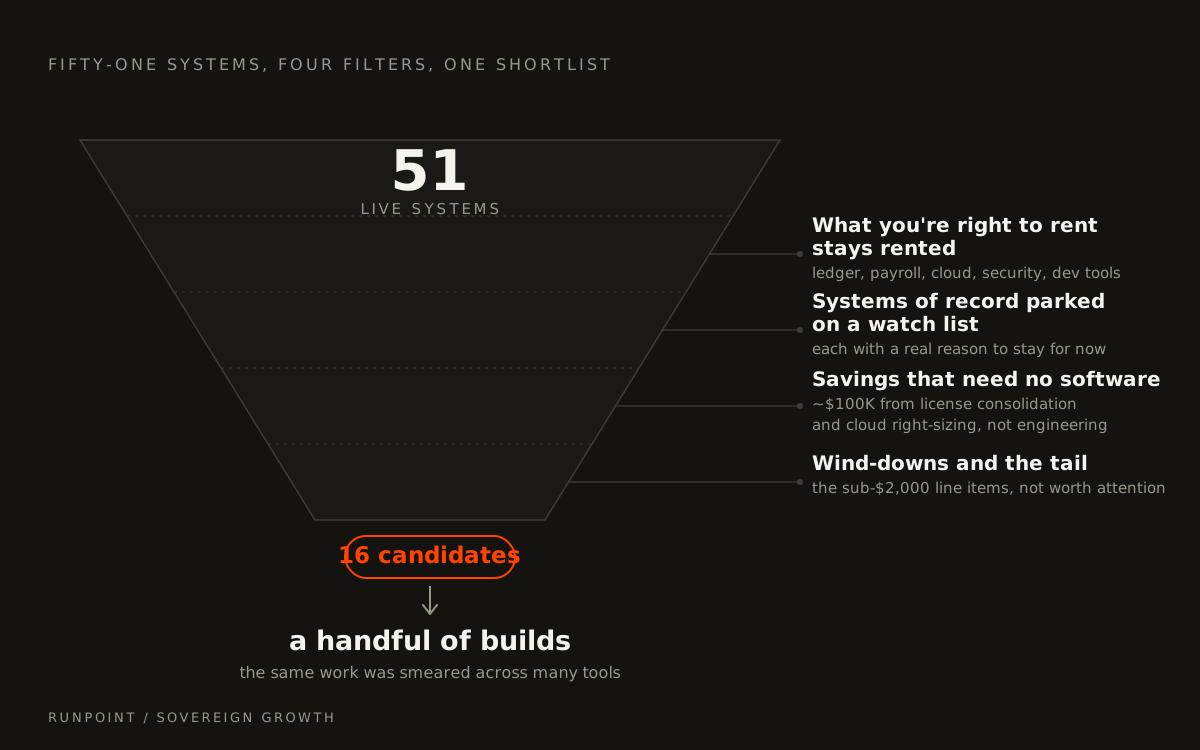
Your general ledger, your payroll rails, your cloud infrastructure, your security tooling, your developer tools: replacing those with custom software would be malpractice. They are commodities sold at a scale you cannot match, maintained by teams larger than your whole company, and they work. Building your own is a way to set money on fire and call it sovereignty. So the first thing our teardown does is set those aside, out loud, with the reasons attached.
The next thing it does is get honest about the deeply embedded systems. The tools that would genuinely hurt to unwind go on a watch list, not a build list, each with a real reason it is staying for now. Some savings turn out to need no software at all. On that fifty-one system stack, roughly a hundred thousand dollars a year was recoverable through license consolidation and cloud right-sizing, which is bookkeeping, not engineering. We do that work and take nothing for it because it is not the point.
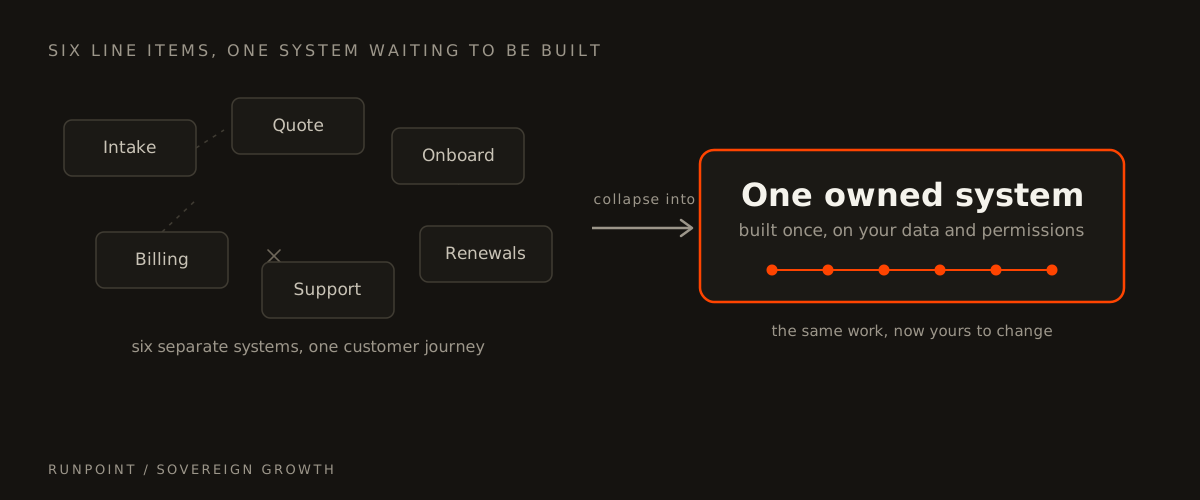
After you strip out what you are right to rent, the deeply embedded systems you should keep, the wind-downs already in motion, and the sub-two-thousand-dollar tail that is not worth anyone's attention, fifty-one systems became sixteen. And those sixteen were not sixteen projects. They collapsed into a small handful of builds, because the same work was smeared across many tools. One customer journey at that company was spread across six separate systems that did not talk to each other. Six line items on the receipt, one owned system waiting to be built.
Why replace at all
Savings get you in the door. They are not the reason.
The reason is that the first real build forces something no software purchase ever will: an agreed, written model of how your business actually runs. To replace six tools with one, you have to decide what the process really is, who is allowed to do what, and what happens when. That model is the asset. The Alpha Layer and new products that were impossible before AI get built on top of it. You cannot automate a workflow you do not own, and you do not truly own a workflow whose logic lives inside a vendor's database. Owning the plumbing means owning your data, your permissions, and your pace of change.
Two objections come up every time, and both deserve a straight answer.
The first is some version of custom software is what burned us last time. Usually that is true, and usually the scar is real. But look at what custom software meant when it happened. It meant hiring a dev shop, writing a two-hundred-page spec that was wrong by the time it shipped, and then being held hostage for years by the only people who understood the code. That was the economics of building software before AI, and those economics were bad. They have changed categorically, not incrementally. The cost of building and maintaining owned systems has fallen far enough that the old math simply does not describe the new decision.
The second is who maintains this when you leave. This is the right question, and our answer is built into how we work. Every engagement is built to end. The three tests are the standard: can you swap the underlying model and keep your expertise, can you leave any vendor including us without losing your operations, could you run what we built without us in the room. Documentation and handoff are the deliverable, not a closeout formality. An engagement that ends in dependency delivered dependency, not sovereignty, and we do not do that.
Then there is the money, and here the structure is the whole argument. We are willing to hold our fees until the first major license we are replacing actually comes due. If we are retiring a system that renews in the fall, we do not bill until the fall, and what you pay us is what you were going to pay that vendor anyway. Better than budget neutral from the first day, funded by the subscriptions it retires. Under every version of the structure the rule does not move: ROI positive, or we walk.
This is step one of sovereign growth, and it is step one for a reason. Everything else a company can own is built on the plumbing it stops renting.